What Makes Enameled Lava Stone an Exceptional Counter Top Material
A surface that takes everything a kitchen demands
A kitchen counter top endures more physical stress than almost any other surface in a home. Hot pans placed directly on the surface, acidic liquids, repeated impact, daily cleaning — most materials absorb this treatment and show it over time. Marble stains. Composite resin scratches. Even granite, in its unsealed state, remains porous.
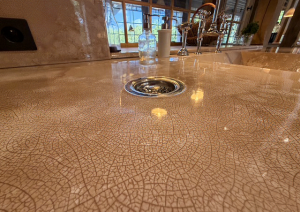
Enameled lava stone does not have these weaknesses. The enamel layer, fused to the volcanic rock at high temperature, creates a vitrified surface with no porosity whatsoever. Heat does not affect it. Acids do not etch it. Cleaning products do not degrade it. The surface you install on day one looks identical ten or twenty years later — not because it has been maintained carefully, but because the material itself does not change.
This permanence is not a marketing claim. It is a direct consequence of the manufacturing process: a fired enamel surface behaves like glass — inert, stable, and indifferent to its environment.
A worksurface that also defines the aesthetics of a room
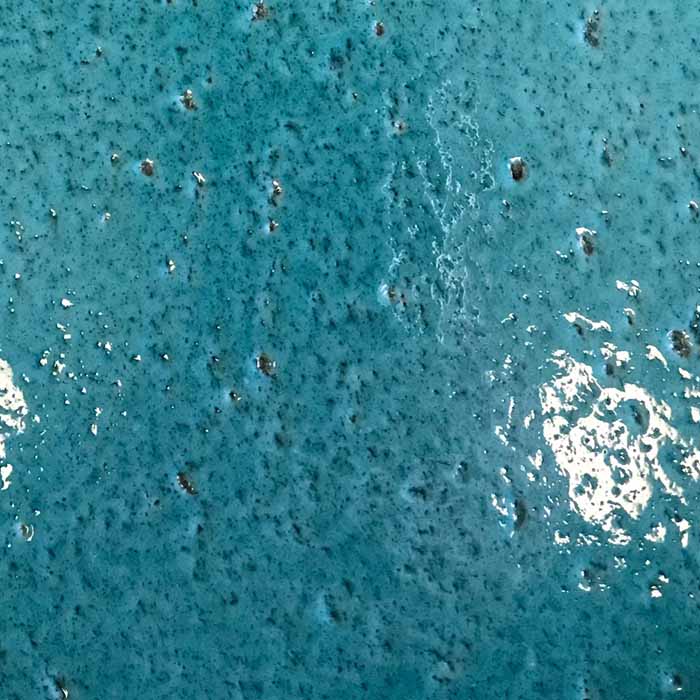
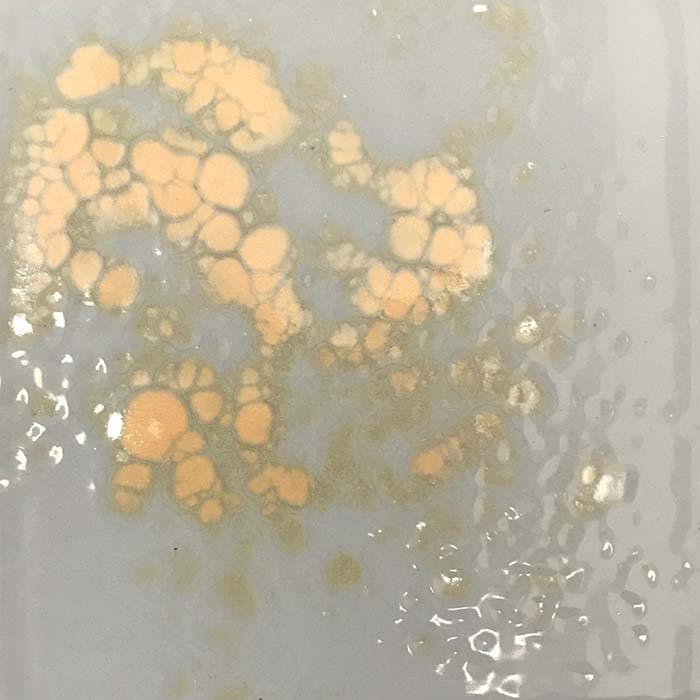
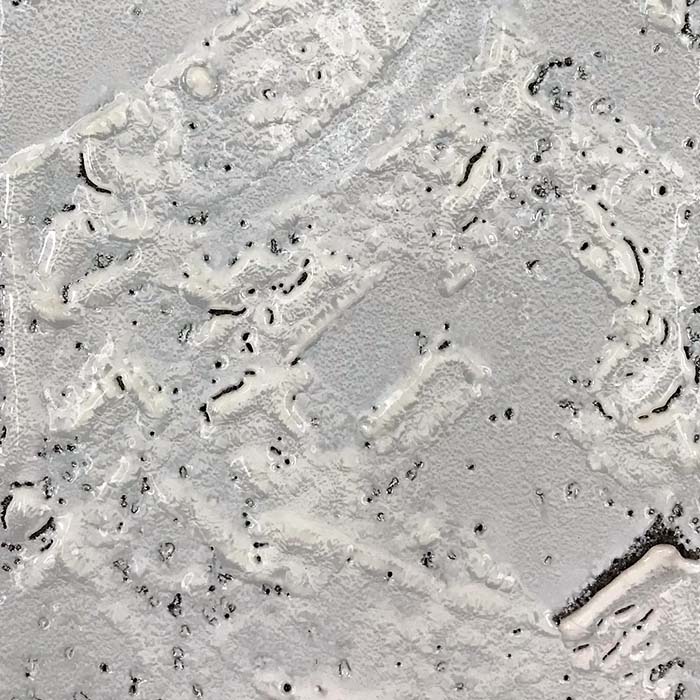
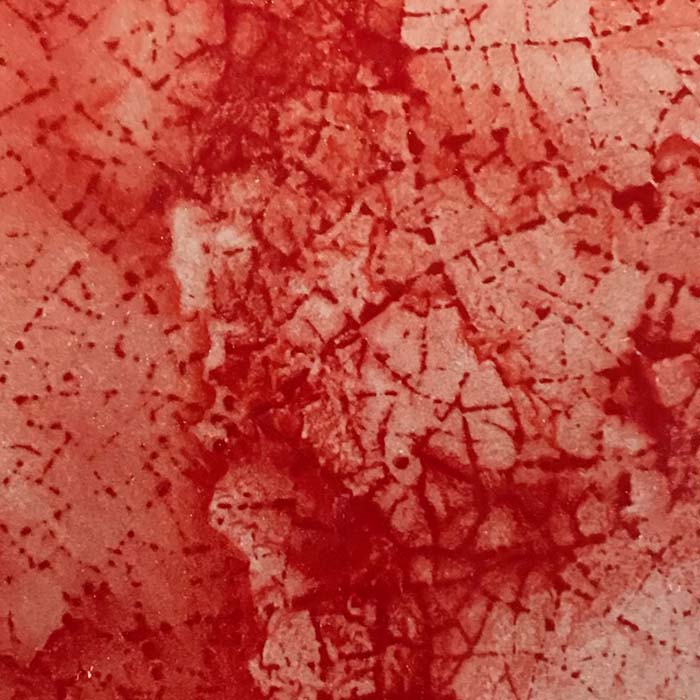
Beyond performance, a counter top in enameled lava brings something that functional materials rarely offer: a genuine visual presence. The volcanic rock retains its natural mineral variations beneath the enamel. Even in a solid color, the surface has a depth and a texture that changes with light and viewing angle.
This quality matters in a kitchen or bathroom where the work surface occupies a large visual surface area. It is not a background element. It is a design statement. Architects and interior designers regularly specify enameled lava stone countertops precisely because the material does the work of defining a space without requiring additional decorative layers.
The enamel palette is virtually unlimited. From off-whites and warm grays to deep blacks, saturated blues or terracotta tones, each counter top can be matched to a precise color specification — including custom shades developed for a specific project.
Custom Dimensions, Configurations and Installations
A counter top cut to exact dimensions
One of the defining advantages of enameled lava stone is that every counter top is produced to exact specifications. There are no standard sizes to work around. The slab is cut to the precise dimensions of the space — whether that means an unusual depth, an irregular shape, or a format that no industrial manufacturer offers.
This dimensional freedom is particularly valuable in renovation projects, where the architectural constraints are fixed and the work surface must adapt to them — not the other way around. Tradition Pierre works directly with the client’s measurements, producing a piece that fits the space as if it were always there.
Cutouts for sinks, hobs, or faucets are integrated during production. The surface arrives ready to install, with no on-site cutting required.
From kitchen worktops to bathroom vanity tops
The same material logic that makes enameled lava stone exceptional in a kitchen counter top applies equally in a bathroom context. A vanity top in enameled lava — with or without an integrated sink — brings the same impermeability, the same resistance to cleaning products, and the same visual depth to a space that demands both hygiene and elegance.
Tradition Pierre regularly produces complete bathroom ensembles: vanity counter top, integrated basin, and matching wall panels in the same enamel color and finish. This continuity of material — impossible to achieve with components from different manufacturers — produces a level of visual coherence that defines the most accomplished interior projects.
Enameled Lava Stone Counter Top projects
Questions about Enameled Lava Stone Counter Top ?
Yes. Enameled lava stone is frost-resistant and UV-stable, which makes it suitable for outdoor kitchen counter tops and exterior worksurfaces. The enamel does not fade under sunlight and the rock withstands temperature variations without cracking. Specific technical recommendations apply for outdoor installations and are provided with each project.
Quartz composite is uniform, predictable and widely available. Enameled lava stone is unique, custom-made and visually incomparable. Both are non-porous and easy to clean. The key differences are in aesthetics — lava stone has a mineral depth quartz cannot replicate — and in production: every lava counter top is made to order, while quartz is available in standard slabs. For projects where uniqueness matters, lava stone has no equivalent.
Yes. The enamel fired at over 900°C is more heat-resistant than the pans themselves. Placing a hot pan directly on an enameled lava counter top will not damage the surface. This is one of the material's most significant practical advantages over composite resins and most natural stones, which recommend the use of trivets.
Lava stone is a dense volcanic rock. A standard counter top slab typically weighs between 80 and 120 kg per square meter depending on thickness. This weight must be accounted for in the design of the supporting structure — whether a cabinet, a frame, or a masonry base. Tradition Pierre provides technical load specifications with each project.
Minor chips can be assessed by the workshop. A full repair by re-enameling is possible under certain conditions and requires the piece to be returned to the atelier for a new firing. Tradition Pierre evaluates each situation individually and advises the most appropriate solution based on the nature and extent of the damage.
The standard lead time is 6 to 10 weeks from order confirmation. This includes cutting, enamel application, kiln firing, and quality control. Lead time may vary depending on the complexity of the piece and current workshop capacity. Tradition Pierre provides a confirmed timeline at the start of each project.
Yes. Tradition Pierre can develop custom enamel colors to match a specific reference — RAL, Pantone, or a physical sample. This service is particularly relevant for architecture and interior design projects working with a defined color palette. A test tile is produced and validated before full production begins.